Understanding Inflammation and the Grounding Theory
Inflammation is the body's natural defense mechanism. When you cut your finger or catch a cold, acute inflammation sends immune cells to the area, fights pathogens, and initiates healing. This type of inflammation is normal and necessary.
The problem arises with chronic inflammation — a low-grade, persistent inflammatory state where the immune system stays activated even when there's no immediate threat. Chronic inflammation is implicated in heart disease, type 2 diabetes, arthritis, autoimmune conditions, neurodegenerative diseases, and even accelerated aging.
This is where grounding enters the picture. Research suggests that direct contact with the Earth's surface may provide the body with free electrons that act as natural anti-inflammatory agents.
The Electron Transfer Theory
The Earth's surface carries a reservoir of free electrons, maintained by atmospheric electricity, lightning, and solar radiation. When your body makes conductive contact with the ground — bare feet on soil, or skin on a grounding sheet — these electrons flow into your body.
In the inflammatory process, immune cells called neutrophils release reactive oxygen species (ROS) — essentially free radicals — to destroy damaged cells and pathogens. This is a normal part of healing. However, excess ROS that aren't neutralized can damage surrounding healthy tissue, perpetuating the inflammatory cycle.
The grounding theory proposes that Earth's free electrons serve as natural antioxidants, neutralizing excess ROS and thereby interrupting the chronic inflammatory cascade. It's a simple concept: supply the body with the electrons it needs to quench the oxidative byproducts of inflammation.
What the Research Shows
Thermal Imaging Evidence
Several case studies have used medical infrared imaging (thermography) to visualize inflammation before and after grounding. Thermal imaging detects heat patterns in the body — areas of increased heat indicate inflammation.
Published case reports have shown dramatic reductions in heat patterns at sites of chronic inflammation after grounding sessions. In one well-documented case, a woman with a chronic, non-healing wound showed visible improvement on thermal imaging after sleeping grounded for several weeks, alongside significant pain reduction.
Delayed Onset Muscle Soreness (DOMS) Study
A 2010 study examined grounding's effect on exercise-induced inflammation. Participants performed eccentric exercises to induce muscle damage, then either slept grounded or sham-grounded. The grounded group showed:
- Lower white blood cell counts (indicating less inflammatory response)
- Reduced creatine kinase levels (a marker of muscle damage)
- Less subjective pain
- Faster apparent recovery
This is one of the more controlled studies in the grounding literature and provides measurable, objective evidence of reduced inflammatory markers.
Blood Viscosity and Inflammatory Markers
The 2013 study on blood viscosity by Chevalier et al. found that grounding increased the zeta potential of red blood cells, which reduces blood viscosity. This is relevant to inflammation because thick, viscous blood is both a consequence and a contributor to chronic inflammatory states. Improved blood flow may help the body resolve inflammation more efficiently.
Who May Benefit Most
While grounding research is still emerging, the anti-inflammatory mechanism may be particularly relevant for people dealing with:
- Chronic joint or muscle pain — where inflammation drives discomfort
- Post-exercise soreness — research specifically studied this application
- Autoimmune-related inflammation — though clinical trials are needed
- Fibromyalgia — where widespread inflammation and pain sensitivity intersect
- General "feeling inflamed" — bloating, stiffness, fatigue that may relate to low-grade systemic inflammation
How to Ground for Inflammation
Consistency and duration matter. Here's a practical approach:
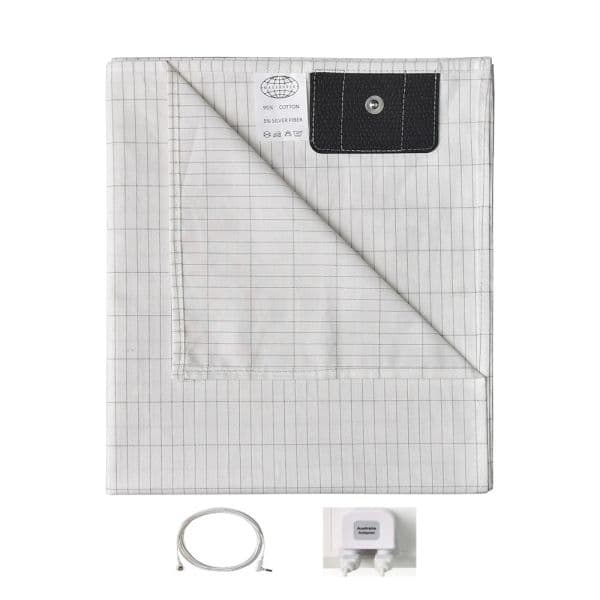
- Sleep grounded every night using a grounding sheet. This gives you 7-8 hours of continuous electron transfer — the longest grounding session most people can realistically achieve.
- Add daytime grounding with a desk grounding mat under your feet or a grounding wrist band while working.
- Walk barefoot outdoors when weather and terrain permit — 20-30 minutes on grass, soil, or sand.
- Track your symptoms. Note pain levels, stiffness, energy, and overall comfort before you start and weekly thereafter. Changes may be gradual.
What to Expect: A Realistic Timeline
- Days 1-7: Some people feel subtle changes — slightly less stiffness in the morning, a sense of calm. Others notice nothing yet.
- Weeks 2-4: Reduced morning stiffness and improved comfort are commonly reported. Sleep quality may also improve, which itself helps reduce inflammation.
- Weeks 4-8: More consistent and noticeable improvements for many users. This is typically when people become confident that grounding is making a difference.
Important Context
Grounding is not a cure or treatment for any inflammatory condition. The research is promising but still limited in scale. If you have a chronic inflammatory condition, continue working with your healthcare provider. Grounding may serve as a complementary practice — one additional tool in a broader approach to managing inflammation that includes diet, movement, sleep, stress management, and appropriate medical care.
That said, grounding carries essentially no risk and requires no lifestyle upheaval. For many people, it's worth trying as part of a holistic approach to reducing chronic inflammation.