Why Sleep Matters — and Why So Many of Us Struggle
Sleep is the foundation of nearly every aspect of health. During deep sleep your body repairs muscle tissue, consolidates memory, regulates hormones, and clears metabolic waste from the brain. Yet according to the CDC, roughly one in three American adults does not get enough sleep on a regular basis, and chronic insomnia affects an estimated 10 to 15 percent of the population.
The consequences of poor sleep extend far beyond daytime fatigue. Chronic sleep deprivation is associated with increased risk of cardiovascular disease, metabolic dysfunction, weakened immune function, and impaired cognitive performance. It is no surprise that people are searching for natural, non-pharmacological ways to improve their sleep — and grounding is one approach that is gaining significant attention.
The Link Between Grounding and Sleep
Grounding — also called earthing — is the practice of making direct electrical contact with the Earth's surface. When you sleep on a conductive grounding sheet, free electrons from the Earth flow into your body through the sheet's conductive fibers. Researchers believe this electron transfer may influence several biological systems that are directly relevant to sleep.
Cortisol and the Sleep-Wake Cycle
Cortisol is often called the "stress hormone," but it also plays a central role in your circadian rhythm. In a healthy pattern, cortisol peaks shortly after waking (the cortisol awakening response) and gradually declines throughout the day, reaching its lowest point around midnight. This decline signals your body that it is time to sleep.
When this rhythm is disrupted — by chronic stress, irregular schedules, excessive screen time, or other factors — cortisol can remain elevated at night, making it difficult to fall asleep and stay asleep. You may find yourself lying awake with a racing mind, or waking up in the early hours unable to return to sleep. For more on this pattern, see our blog post on why you wake up at 3 AM.
A landmark 2004 study by Ghaly and Teplitz published in the Journal of Alternative and Complementary Medicine measured 24-hour cortisol profiles in subjects before and after sleeping grounded for eight weeks. The results showed that grounding during sleep appeared to resynchronize cortisol secretion, aligning it more closely with the natural circadian rhythm. Participants who previously had abnormal cortisol patterns — particularly elevated nighttime cortisol — showed significant normalization. Subjectively, participants reported falling asleep faster, waking fewer times during the night, and feeling more refreshed in the morning.
The Autonomic Nervous System and Relaxation
Your autonomic nervous system has two primary branches: the sympathetic (fight-or-flight) and the parasympathetic (rest-and-digest). Falling asleep requires a shift toward parasympathetic dominance — your heart rate slows, your breathing deepens, and your muscles relax. Chronic stress keeps the sympathetic branch overactive, which is one reason stressed individuals struggle with sleep onset.
A 2012 study by Chevalier examined the effects of grounding on autonomic nervous system function by measuring heart rate variability (HRV). The study found that just one hour of grounding shifted participants' autonomic balance toward increased parasympathetic activity, suggesting a calming effect on the nervous system (Chevalier, 2012, European Biology and Bioelectromagnetics). While this study did not directly measure sleep, the observed shift toward parasympathetic dominance is exactly the physiological state the body needs to initiate and maintain sleep.
Inflammation and Sleep Disruption
Chronic low-grade inflammation is both a cause and a consequence of poor sleep. Pro-inflammatory cytokines like IL-6 and TNF-alpha can fragment sleep architecture, reducing time spent in restorative deep sleep. Conversely, inadequate sleep increases inflammatory markers, creating a vicious cycle.
Grounding research suggests that the influx of free electrons may act as a natural anti-inflammatory by neutralizing excess free radicals. A 2015 review by Oschman, Chevalier, and Brown published in the Journal of Inflammation Research documented multiple studies showing reductions in inflammation-related markers after grounding. By potentially dampening the inflammatory load, grounding may help break the inflammation-sleep disruption cycle.
What the Sleep Studies Show
These statements have not been evaluated by the FDA. Grounding products are not intended to diagnose, treat, cure, or prevent any disease.
While the body of research is still growing, several studies have directly examined grounding and sleep outcomes:
- Ghaly and Teplitz (2004): 12 subjects with sleep disturbances, pain, and stress slept grounded for eight weeks. All 12 reported improvements in sleep quality. Cortisol profiles shifted toward a healthier circadian pattern, with nighttime cortisol levels decreasing significantly.
- Chevalier and Sinatra (2011): A double-blind study of 40 subjects found that sleeping grounded for one month improved sleep duration, reduced sleep disturbance, and decreased fatigue compared to the sham-grounded control group.
- Ober, Sinatra, and Zucker — case studies: In the book Earthing, the authors document dozens of anecdotal cases of people experiencing dramatic improvements in sleep onset, duration, and quality after beginning a grounding practice. While case studies are lower on the evidence hierarchy, the consistency of the reports is notable.
How Grounding May Address Common Sleep Problems
Difficulty Falling Asleep (Sleep Onset Insomnia)
If you lie in bed for 30 minutes or more before falling asleep, elevated cortisol and sympathetic nervous system activity may be contributing factors. Grounding's observed effects on cortisol normalization and parasympathetic activation suggest it may help your body transition into sleep mode more efficiently.
Waking During the Night
Nighttime awakenings — especially between 2 AM and 4 AM — often correlate with abnormal cortisol spikes. The Ghaly and Teplitz study showed that grounding helped flatten these inappropriate nighttime cortisol peaks, which may explain why participants reported fewer awakenings. Want to understand this pattern better? Read Does Grounding Help You Sleep? on our blog.
Light or Non-Restorative Sleep
Inflammation can reduce the proportion of deep (slow-wave) sleep in your nightly sleep architecture, leaving you feeling unrefreshed even after a full night. Grounding's potential anti-inflammatory effects may help improve sleep depth over time, though more research using polysomnography (sleep lab measurements) is needed to confirm this.
Restless Legs and Nighttime Discomfort
While there are no published studies specifically on grounding and restless leg syndrome, anecdotal reports from grounding practitioners frequently mention reduced leg restlessness and nighttime muscle tension. This may be related to improved circulation — grounding has been shown to increase red blood cell zeta potential, reducing blood viscosity and potentially improving microcirculation to the extremities.
How to Set Up Grounding for Sleep: A Practical Guide
Step 1: Choose Your Grounding Bedding
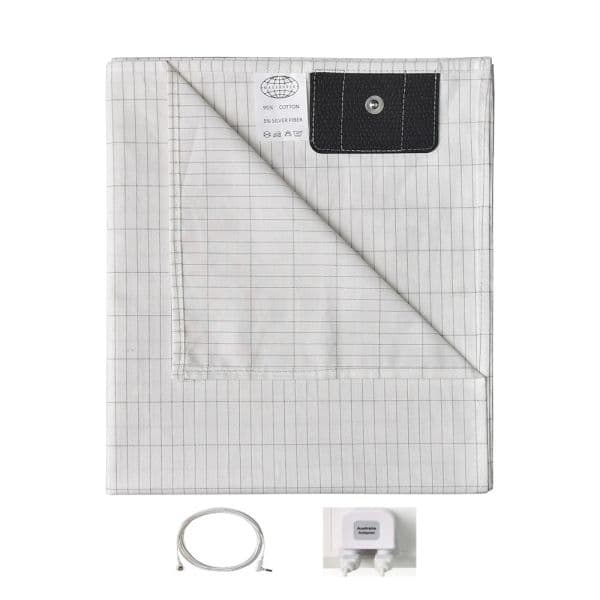
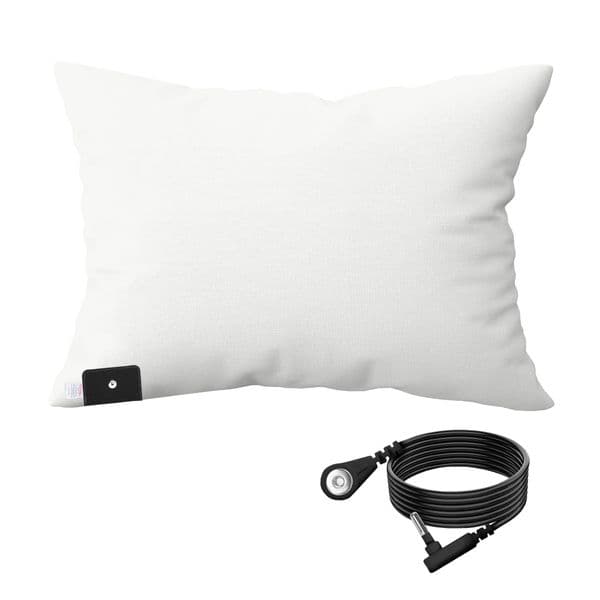
The most effective sleep grounding setup starts with a conductive sheet that covers your sleeping surface. Our Queen Grounding Sheet is woven with silver-infused fibers and fits like a standard fitted sheet. For additional contact, a Grounding Pillowcase ensures your face and neck are grounded as well — especially helpful for people who sleep on their side with minimal torso contact on the sheet.
Step 2: Test Your Outlet
Plug a grounding outlet tester into the outlet nearest your bed. The tester will confirm that the ground port is properly wired. If the tester indicates a ground fault, do not use the outlet for grounding until an electrician has repaired it.
Step 3: Connect and Sleep
Attach the grounding cord from your sheet to the ground port of the outlet. That is the entire setup. There is no switch to flip, no battery to charge, no app to configure. Simply sleep on the sheet with some bare skin touching the fabric — bare arms, legs, or torso are sufficient.
Step 4: Track Your Results
Keep a simple sleep journal for the first four weeks. Each morning, note how long it took you to fall asleep, how many times you woke up, and how rested you feel on a scale of 1 to 10. If you use a sleep tracker (like an Oura Ring or Apple Watch), compare your data before and after starting grounding. Many users observe measurable improvements in deep sleep and HRV within two to three weeks.
Tips for Maximizing Sleep Benefits
- Consistency matters: Ground every night, not just occasionally. The cortisol normalization observed in studies occurred after sustained nightly grounding over weeks.
- Minimize skin barriers: Sleep in lightweight clothing that exposes your arms and legs, or sleep without clothing for maximum contact.
- Combine with good sleep hygiene: Grounding works best as part of a comprehensive sleep routine — dim lights an hour before bed, keep your room cool (65-68 degrees F), and avoid screens in the final 30 minutes before sleep.
- Be patient: Some people feel a difference the first night. For others it takes two to four weeks of consistent use before improvements become noticeable. Give it at least 30 days before drawing conclusions.
- Care for your sheet: Wash your grounding sheet with mild detergent and avoid bleach or fabric softener, which can coat the conductive fibers and reduce effectiveness.
The Bottom Line on Grounding and Sleep
Sleep is non-negotiable for health, and grounding is one of the simplest interventions you can add to your sleep routine. Research suggests that sleeping grounded may help normalize cortisol rhythms, calm the nervous system, and reduce the inflammatory burden that disrupts sleep architecture. While more large-scale studies are needed, the existing evidence — combined with the extremely low risk profile — makes grounding a compelling option for anyone looking to improve their sleep naturally.
Ready to try it? Our Sleep Starter Kit includes a conductive fitted sheet, grounding cord, and outlet tester — everything you need for your first grounded night of sleep.
These statements have not been evaluated by the FDA. Grounding products are not intended to diagnose, treat, cure, or prevent any disease. Consult your healthcare provider if you have a medical condition or are taking medication.