What Does the Science Actually Say About Earthing?
Earthing — also known as grounding — is the practice of making direct physical contact with the Earth's surface. Walk barefoot on soil, swim in a natural body of water, or sleep on a conductive grounding sheet, and you're earthing.
The concept sounds almost too simple to be meaningful. But over the past two decades, a growing number of peer-reviewed studies have investigated earthing's effects on the human body, and the findings are intriguing. Here are five benefits that research has specifically examined.
1. Improved Sleep Quality
Sleep is the most widely studied benefit of earthing. A 2004 study in the Journal of Alternative and Complementary Medicine measured salivary cortisol levels in participants who slept grounded over an 8-week period. Cortisol — the body's primary stress hormone — follows a circadian rhythm, peaking in the morning and dropping at night.
The grounded participants showed a significant normalization of their cortisol profiles. Nighttime cortisol levels decreased, morning peaks became more pronounced, and participants reported falling asleep faster, sleeping more deeply, and waking more refreshed.
This aligns with the experiences of thousands of grounding sheet users who report better sleep quality as the first and most noticeable benefit. The connection between cortisol regulation and sleep quality is well-established in mainstream medicine, making this finding particularly compelling.
2. Reduced Inflammation
Chronic inflammation is recognized as a root factor in numerous health conditions, from cardiovascular disease to chronic pain to autoimmune disorders. Several studies suggest earthing may influence inflammatory processes.
The theoretical mechanism is straightforward: the Earth's surface is rich in free electrons. When these electrons enter the body through direct contact, they may serve as natural antioxidants — neutralizing positively charged free radicals (reactive oxygen species) that drive the inflammatory cascade.
Thermal imaging studies have documented visible reductions in inflammation after grounding sessions. One case study published in the Journal of Inflammation Research (2015) showed dramatic improvement in a patient with chronic wound inflammation after consistent grounding. Another study using blood markers found reduced indicators of inflammation in grounded subjects.
For a deeper look at this topic, see our article on grounding and inflammation.
3. Pain Reduction
Pain and inflammation are closely linked, so it's not surprising that earthing research has also found effects on pain perception. The 2004 cortisol study noted that participants experienced reduced pain alongside their sleep improvements. A 2010 pilot study found that grounded participants reported meaningful reductions in pain intensity compared to sham-grounded controls.
Delayed onset muscle soreness (DOMS) — the pain you feel after intense exercise — has also been studied. Research published in the Journal of Alternative and Complementary Medicine (2010) found that grounded subjects showed reduced creatine kinase levels (a marker of muscle damage) and reported less pain compared to the control group after exercise.
These findings are relevant for anyone dealing with chronic pain conditions, post-exercise soreness, or the kind of aches and stiffness that disrupt sleep and daily comfort. Some fibromyalgia sufferers have also reported improvements with consistent grounding.
4. Stress and Anxiety Reduction
The autonomic nervous system (ANS) controls your stress response. It has two branches: the sympathetic ("fight or flight") and the parasympathetic ("rest and digest"). Chronic stress tips the balance toward sympathetic dominance — elevated heart rate, shallow breathing, tension, and anxiety.
A 2011 study in Integrative Medicine: A Clinician's Journal measured the effect of earthing on ANS function using heart rate variability (HRV), a well-accepted metric. Grounded participants showed a significant shift toward parasympathetic dominance — their bodies moved into a more relaxed, recovery-oriented state.
This may partly explain why so many users report feeling calmer, less anxious, and more centered after grounding. The research on grounding and anxiety is still in its early stages, but the ANS findings provide a plausible physiological mechanism.
5. Improved Blood Flow and Cardiovascular Markers
One of the more surprising findings in earthing research relates to blood viscosity. A 2013 study by Chevalier et al. measured the zeta potential of red blood cells before and after grounding. Zeta potential reflects the electrical charge on the surface of red blood cells — a higher zeta potential means cells repel each other more strongly, leading to thinner, less viscous blood that flows more easily.
The study found that just two hours of grounding significantly increased zeta potential, effectively reducing blood viscosity. This is meaningful because high blood viscosity (thick, sticky blood) is recognized as a risk factor for cardiovascular events.
While this single study doesn't prove that grounding prevents heart disease, the measurable change in blood properties is a concrete, objective finding that warrants further investigation.
The Bigger Picture
No single practice is a magic bullet for health. Earthing is not a cure for any disease, and the research — while promising — is still developing. What makes earthing compelling is the convergence of multiple lines of evidence all pointing in the same direction: reduced inflammation, better sleep, lower stress, less pain, and improved circulation.
These benefits also align with what we'd expect if the core theory is correct — that modern life has disconnected us from the Earth's electrical surface, and reconnecting allows the body to function more optimally.
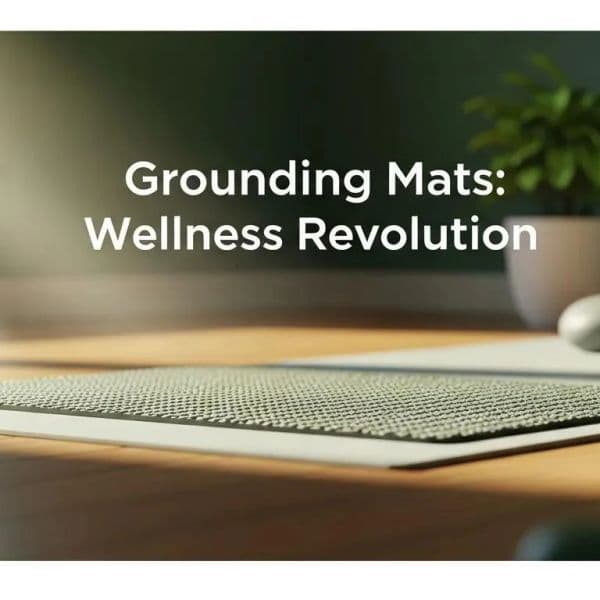
The simplest way to test earthing for yourself is to sleep grounded. A complete grounding kit gives you everything you need — a grounding sheet, a desk mat for daytime use, and the cords and testers to ensure a proper connection. Ground consistently for 4-6 weeks and observe how you feel.